
Protecting Buildings, Equipment & Entry Points: Where Bollards Make the Biggest Impact
Damage doesn’t just happen inside the warehouse.
From loading docks to building entrances, external and high-traffic areas are just as vulnerable to vehicle impact — and often come with higher repair costs.
In many cases, the same high-risk areas are impacted again and again without preventative measures in place.
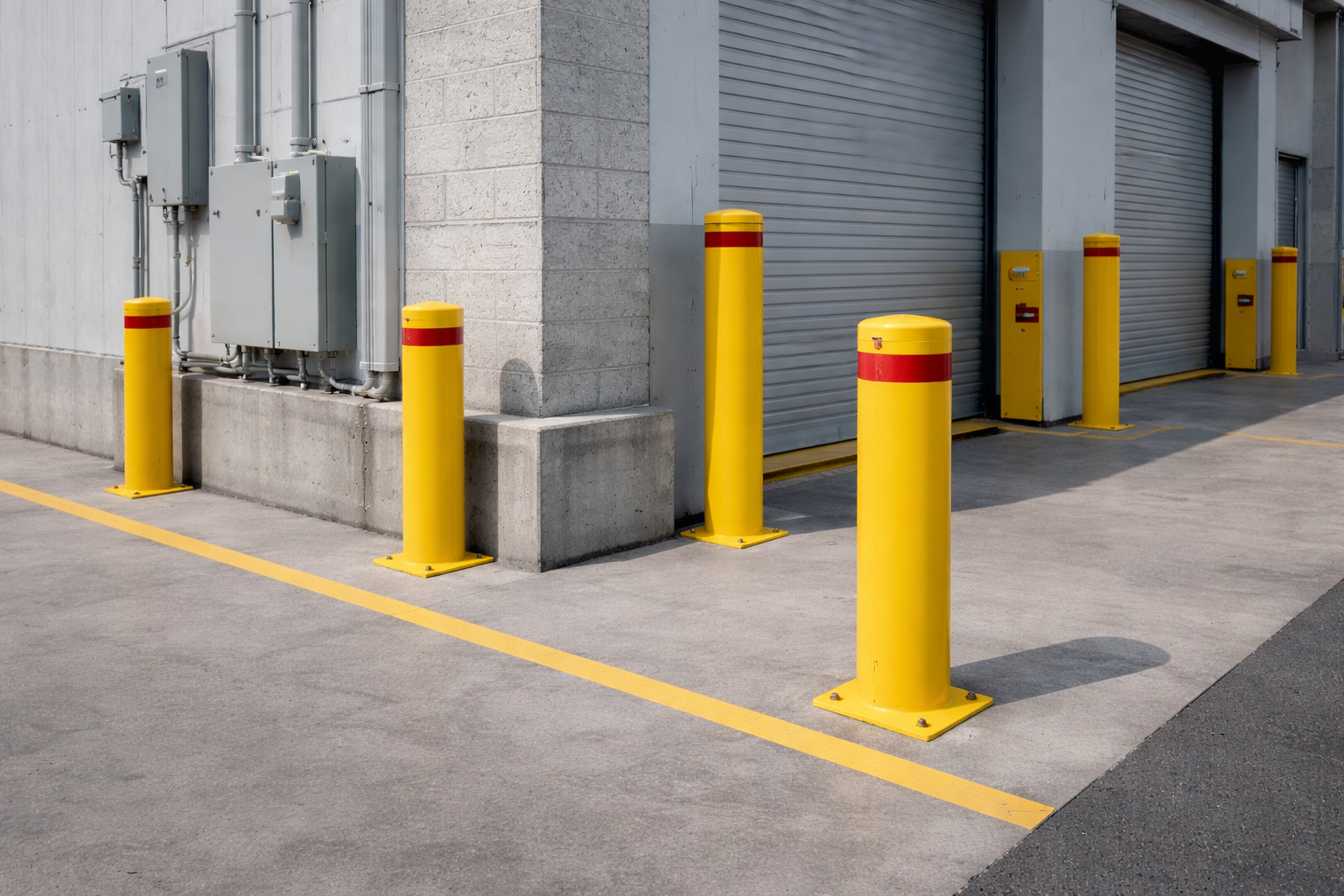
Installing bollards in the right locations helps protect:
Buildings and infrastructure
Entry points and access zones
Equipment and services
Pedestrian areas
This guide explains where bollards are most effective — and how they help prevent costly damage.
Why External Protection Matters
Unlike internal racking, external assets are often:
Exposed to larger vehicles
Less controlled environments
Higher impact forces
Damage to these areas can result in:
Structural repairs
Operational disruption
Safety risks for staff and visitors
In many cases, a single impact can cause significant downtime.
Key Areas Where Bollards Should Be Installed
Strategic placement is critical — bollards are most effective when installed in high-risk zones.
Entry Points & Doorways
One of the most common impact areas.
Risks:
Forklifts or trucks misjudging clearance
Reversing impacts
Tight turning spaces
Why bollards help:
Act as a physical stop before impact
Protect roller doors and entry structures
Building Corners
Corners are highly exposed and frequently damaged.
Risks:
Blind spots
Tight manoeuvring
Vehicle misalignment
Why bollards help:
Shield vulnerable edges
Prevent structural damage
Service & Utility Areas
Includes:
Electrical boxes
Gas lines
Water systems
Risks:
Accidental impact causing service disruption
Safety hazards
Why bollards help:
Create a protective barrier around critical infrastructure
Damage here can be costly and dangerous
Loading Docks & Delivery Zones
High-traffic, high-risk environments.
Risks:
Trucks reversing
Forklift congestion
Limited space
Why bollards help:
Define safe zones
Protect dock structures and surrounding assets
Pedestrian Areas
Separating people from vehicles is critical.
Risks:
Vehicle encroachment into walkways
Limited visibility
Why bollards help:
Clearly define safe pedestrian zones
Reduce risk of accidents
How Bollards Reduce Long-Term Costs
Installing bollards is a simple way to prevent ongoing expenses.
They help:
Avoid structural repairs
Reduce maintenance costs
Prevent downtime
Protect valuable infrastructure
One well-placed bollard can prevent repeated damage in the same area.
Choosing the Right Bollard
Not all bollards are the same — selection depends on the application.
Consider:
Impact level (light vs heavy-duty)
Location (internal vs external)
Mounting type (surface vs in-ground)
Visibility requirements
The right choice ensures maximum protection and longevity.
Common Mistakes to Avoid
Installing too few bollards
Poor placement (missing impact zones)
Using light-duty protection in high-risk areas
Treating bollards as optional instead of essential
Placement and specification matter just as much as the product itself.
How Unirack Protect Can Help
Unirack Protect provides durable, high-visibility bollards designed for real-world industrial environments.
We help you:
Identify high-risk external and internal areas
Select the right type of bollard
Install protection where it delivers the most value
Reduce ongoing damage and maintenance costs
Protect Your Site Before Damage Happens
If your facility has exposed entry points, service areas, or high-traffic zones, bollards are one of the simplest and most effective safety upgrades you can make.
Contact Unirack Protect to discuss your site protection requirements or request a safety assessment.